Tracing the Development of Fairness Certification Processes for Digital Slot Mechanisms in the United Kingdom
Frankie Ludwig · Aug 19, 2026
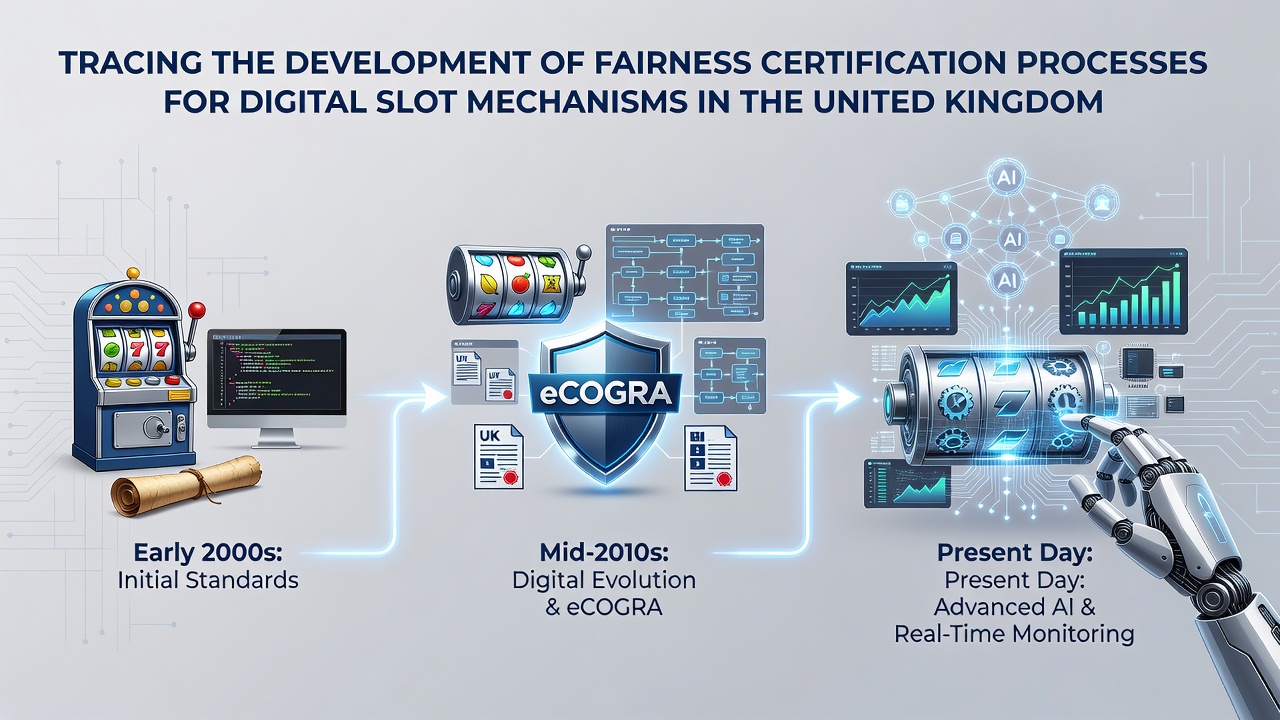
Tracing the Development of Fairness Certification Processes for Digital Slot Mechanisms in the United Kingdom
The evolution of fairness certification for digital slot mechanisms in the United Kingdom stretches back several decades, beginning with basic random number generator tests in the 1990s and progressing through layered verification systems that incorporate statistical analysis, software audits, and ongoing compliance checks. Researchers at institutions like the University of Nevada, Reno have documented how early protocols focused primarily on mathematical randomness, yet those frameworks expanded as digital platforms grew more complex and interconnected.
Initial Standards and Early Testing Protocols
Initial certification efforts relied on independent laboratories that examined hardware components and basic software algorithms to confirm that outcomes remained unpredictable and free from manipulation. Data from industry reports shows that by the early 2000s, testing expanded to include payout percentage verification alongside return-to-player calculations, while organizations such as eCOGRA established voluntary standards that many operators adopted to demonstrate transparency. Observers note that these early steps laid the groundwork for more rigorous processes that later integrated real-time monitoring tools capable of flagging anomalies across thousands of game sessions simultaneously.
Expansion Through Technological and Regulatory Shifts
Technological advancements introduced new challenges, prompting certification bodies to develop methods that addressed server-based gaming and remote access points, and experts from the European Gaming and Betting Association have highlighted how these changes required updated testing suites that evaluate both client-side and server-side integrity. Studies published through academic channels indicate that certification now encompasses cryptographic sealing of game files, continuous logging of random sequences, and penetration testing to prevent external interference. What's interesting is that these layered approaches emerged gradually rather than through sudden overhauls, allowing regulators and laboratories to refine procedures based on accumulated evidence from previous audits.
Key Milestones Leading Into 2026
By the mid-2010s, certification processes incorporated mobile compatibility assessments and integration with player protection features such as session limits, and figures from international research papers reveal that these additions responded to rising usage of smartphones for slot play. In August 2026, several certification agencies plan to roll out enhanced protocols that mandate blockchain-based audit trails for every certified game title, a development that builds directly on prior statistical sampling methods. Those who've followed the field observe that this update aligns with broader international efforts to standardize verification across borders, drawing input from bodies in Canada and Australia where similar digital mechanisms have undergone parallel scrutiny.
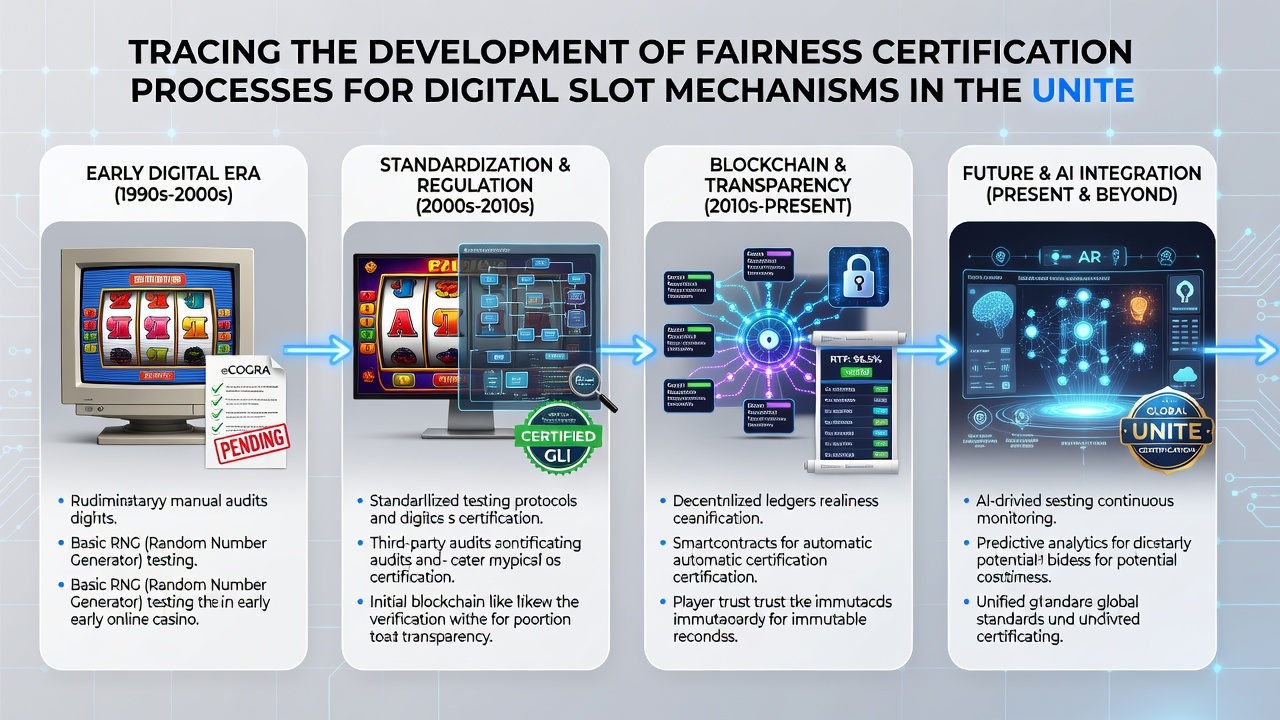
Current workflows typically begin with game submission, followed by source code review, extensive simulation runs that generate millions of outcomes, and final issuance of certificates valid for limited periods before re-testing becomes necessary. Research indicates that failure rates during initial submissions have declined over time because developers now integrate certification requirements into early design stages, reducing the need for multiple revision cycles.
Role of Independent Laboratories and International Benchmarks
Independent laboratories continue to serve as the primary certifiers, applying methodologies refined through decades of accumulated data, while cross-referencing their results against benchmarks established by organizations outside the United Kingdom such as those operating in the United States and the European Union. One study revealed that laboratories using automated tools combined with human oversight achieve higher detection rates for subtle biases that purely manual reviews might miss, and this hybrid model has become standard practice across the sector. People who've examined certification reports often discover detailed appendices that list the exact statistical tests applied, including chi-square analyses and serial correlation checks, providing operators with clear documentation they can share with stakeholders.
Conclusion
The trajectory of fairness certification for digital slot mechanisms demonstrates steady refinement driven by technological progress and accumulated testing experience, resulting in systems that deliver verifiable randomness and consistent payout behaviors. As August 2026 approaches, the introduction of blockchain-integrated trails represents the next incremental step in a process that has already adapted multiple times since its origins, ensuring that certification remains relevant to contemporary digital environments while maintaining core principles of statistical integrity.