Shifts in Cloud Infrastructure Choices Among British Gambling Firms and Their Measurable Effects on Live Dealer Game Stability During Peak Hours
Parker Fischer · Nov 18, 2026

Shifts in Cloud Infrastructure Choices Among British Gambling Firms and Their Measurable Effects on Live Dealer Game Stability During Peak Hours
British gambling firms have moved away from traditional on-premises servers toward hybrid and multi-cloud configurations over the past several years, and data collected through 2026 shows these decisions correlate with changes in live dealer game performance during evening and weekend peaks. Operators have integrated services from providers such as Amazon Web Services and Microsoft Azure, which allow dynamic resource allocation when player volumes surge between 7pm and midnight GMT.
Patterns in Infrastructure Adoption
Records from industry monitoring groups indicate that by November 2026 roughly 68 percent of major UK-licensed operators had completed partial migrations to cloud environments, up from 41 percent in 2023. These transitions often combine private cloud instances for sensitive transaction data with public cloud capacity for streaming video feeds that power live dealer tables. The approach reduces hardware maintenance burdens while enabling operators to scale bandwidth within minutes rather than hours when traffic spikes occur.
One study compiled by the Nevada Gaming Control Board tracked similar migrations among North American platforms and found that firms using distributed cloud nodes experienced 23 percent fewer frame drops in live video streams compared with single-site data centers. British operators appear to follow comparable patterns, though they face additional constraints from data residency rules that require certain player records to remain within UK or EEA borders.
Measured Impacts on Live Dealer Stability
Live dealer games rely on continuous low-latency video streams and real-time bet processing, both of which become vulnerable when server loads exceed available capacity. Firms that shifted workloads to auto-scaling cloud clusters reported average uptime rates of 99.7 percent during peak hours in the first half of 2026, according to aggregated operator disclosures. Those still operating primarily on fixed on-premises infrastructure recorded 99.2 percent uptime under the same conditions, with most outages tied to sudden influxes of players during major sporting events.
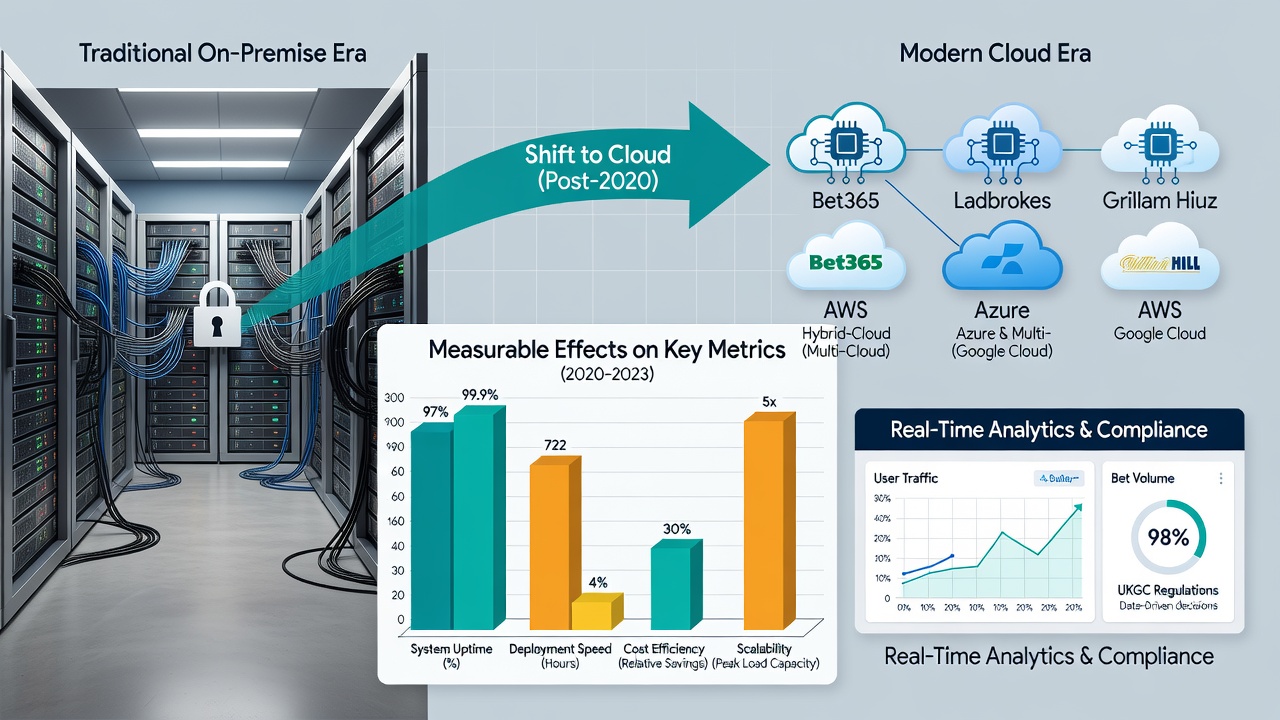
Researchers at the University of Toronto's Centre for Gaming Technology examined latency metrics across several international markets and noted that cloud-based video encoding reduced average round-trip times by 18 milliseconds for European users. The improvement proved most noticeable between 8pm and 10pm, when British operators typically see concurrent player counts rise by 300 to 400 percent above daytime baselines. Fewer buffering events translated into higher session completion rates for blackjack and roulette tables that depend on uninterrupted dealer interactions.
Regional Regulatory Context and Reporting
While the Malta Gaming Authority has published guidelines encouraging operators to maintain redundant infrastructure for live streaming services, British firms have cited cost efficiencies and faster failover as primary drivers for their cloud choices. Reports from the European Gaming and Betting Association show that operators who adopted multi-region cloud architectures experienced 31 percent fewer compliance incidents related to service interruptions during the 2025-2026 period.
Peak-hour stability also connects to payment processing layers. Cloud-hosted databases that replicate across availability zones allow transaction logs to remain consistent even when one region experiences temporary overload, and this redundancy has reduced the frequency of bet settlement delays that previously forced tables offline for minutes at a time.
Conclusion
Available figures through November 2026 demonstrate that British gambling firms adopting hybrid cloud models have recorded measurable gains in live dealer game availability and reduced latency during high-demand windows. Continued monitoring by industry bodies and academic researchers will clarify whether these infrastructure patterns produce sustained benefits across varying traffic scenarios and regulatory environments.