Regulatory Enforcement Targets QuinnBet Gibraltar for Compliance Shortfalls
Parker Fischer · Aug 21, 2026

Regulatory Enforcement Targets QuinnBet Gibraltar for Compliance Shortfalls
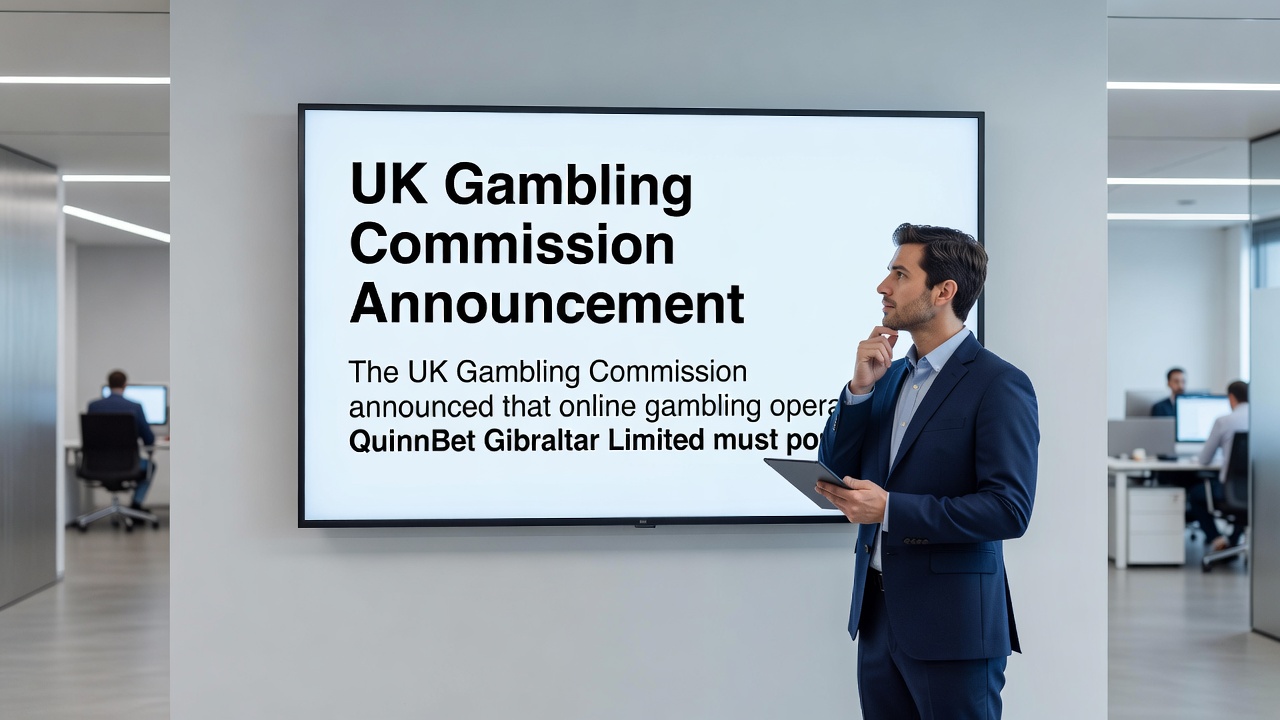
The UK Gambling Commission has required QuinnBet (Gibraltar) Limited to pay £609,104 after an investigation uncovered shortcomings in anti-money laundering controls and social responsibility measures, and this outcome represents the latest entry on the regulator's public list of actions as of 20 August 2026. The settlement covers commission costs along with a public statement and a payment made in lieu of a separate financial penalty, which together bring the matter to a close without further proceedings.
Details of the Settlement Structure
Payment arrangements like this one combine several elements into a single figure, so the total of £609,104 accounts for investigative expenses incurred by the Commission while also incorporating the public statement component and the agreed sum that stands in place of an additional fine. Operators subject to such orders must publish details of the findings, which allows customers and stakeholders to review the specific areas where procedures fell short. The Commission records each completed case on its enforcement register, and this particular matter appears as the most recent entry dated 20 August 2026.
Anti-Money Laundering Shortcomings Identified
Investigators determined that QuinnBet (Gibraltar) Limited had not maintained adequate systems to detect and prevent money laundering risks across its online platform, and the gaps included insufficient customer due diligence processes along with monitoring protocols that failed to flag unusual transaction patterns. Regulatory requirements in the United Kingdom mandate that operators implement risk-based approaches to verify customer identities, track source of funds where necessary, and report suspicious activity to the appropriate authorities. When these controls prove ineffective, the Commission treats the lapse as a breach of licence conditions, which triggers formal enforcement steps. In this instance the identified deficiencies prompted the negotiated settlement rather than a contested hearing.
Social Responsibility Obligations and Failures
Alongside the money laundering issues, the investigation also highlighted weaknesses in the operator's social responsibility framework, particularly around identifying and supporting customers who showed signs of problem gambling. Licensed operators must integrate tools such as deposit limits, reality checks, and self-exclusion options, and they must train staff to recognise indicators that require intervention. The Commission found that QuinnBet (Gibraltar) Limited had not applied these safeguards consistently, resulting in an additional breach category within the overall enforcement action. Settlements of this nature require the operator to confirm that remedial measures have either been implemented or are scheduled for prompt rollout, although the published outcome does not detail the precise corrective steps taken.
Context Within the Commission's Enforcement Record
The Gambling Commission's public register serves as the central repository for all regulatory outcomes, and each entry lists the operator name, the nature of the breaches, and the financial or other penalties applied. As of 20 August 2026 the QuinnBet case sits at the top of that list, which means it is the most recent matter resolved through this type of negotiated agreement. The approach of accepting a payment in lieu of a penalty allows the regulator to conclude investigations efficiently while still securing public disclosure of the findings and reimbursement of its costs. Observers of the sector note that such outcomes reinforce the expectation that operators maintain robust compliance programmes throughout the life of their licence.
Implications for Licensed Operators
Any operator holding a UK remote gambling licence must demonstrate ongoing adherence to both the Licence Conditions and Codes of Practice and the Money Laundering Regulations, and failure to do so can lead to investigations that ultimately produce outcomes similar to the one imposed on QuinnBet (Gibraltar) Limited. The Commission publishes summaries that identify the precise control weaknesses, which in turn provides guidance to the wider industry on areas requiring heightened attention. Because the settlement includes a public statement requirement, details of the AML and social responsibility shortfalls become part of the permanent record available on the regulator's website. Operators therefore have clear examples of the standards against which their own systems will be measured during future compliance assessments.
Conclusion
The enforcement action against QuinnBet (Gibraltar) Limited illustrates how the UK Gambling Commission addresses identified compliance gaps through structured settlements that combine cost recovery, public disclosure, and a payment in lieu of penalty, and the case remains the most recent entry on the official register as of 20 August 2026. Details of the outcome appear on the Commission's site under the title QuinnBet (Gibraltar) Limited to pay £609,104 for regulatory failures, where the full regulatory statement can be accessed. The record shows that both anti-money laundering and social responsibility obligations formed the basis for the required payment, underscoring the regulator's focus on these core areas of operator conduct.